

Expert Quick Take: My Honest Opinion After Inspecting 100+ Bar Settings
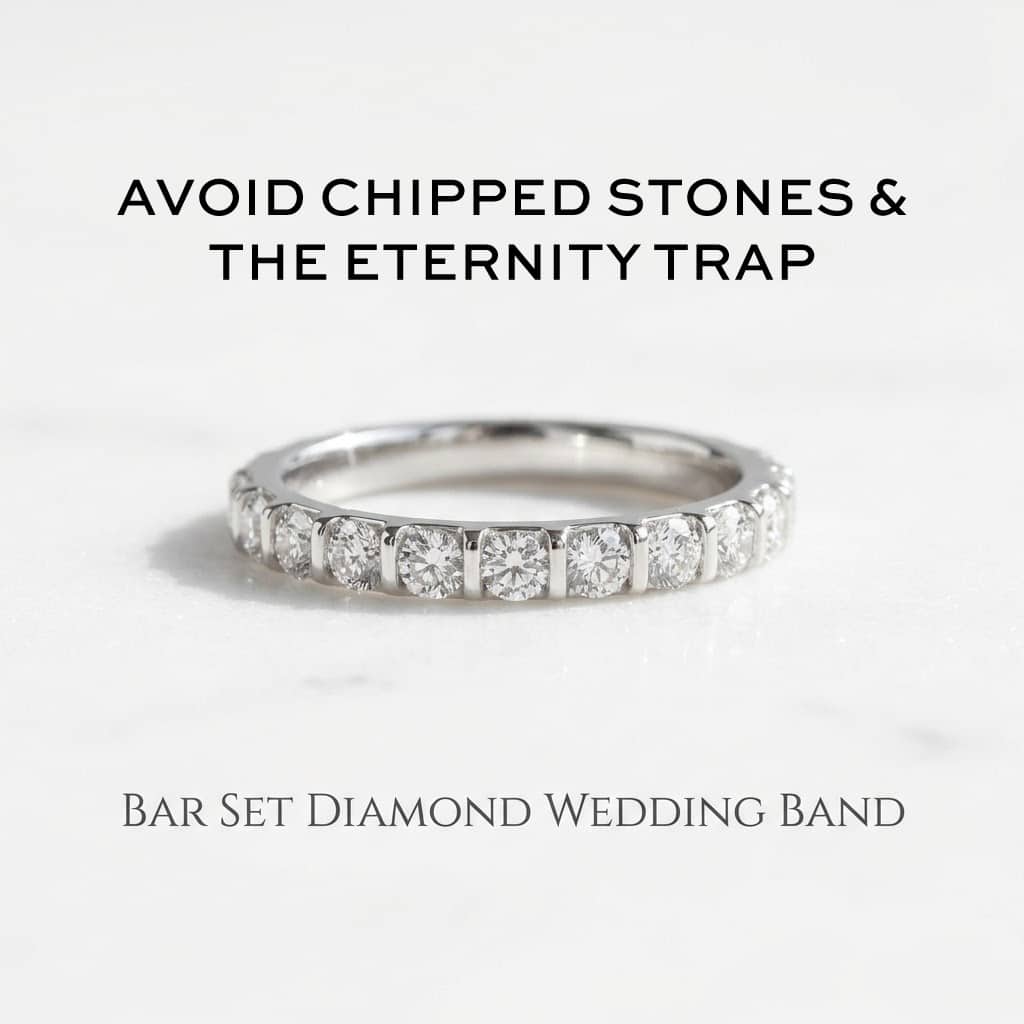
In 2026, a high-quality bar set diamond ring costs between $800 and $3,500 for the mounting alone. While it offers superior light performance by exposing the sides of the stones, this design creates a vulnerable girdle strike zone.
Because the North and South edges of the diamonds are “naked,” they are prone to chipping upon impact. I recommend a Platinum base to ensure the vertical bars don’t warp and always leaving a “Sizing Gap” at the bottom of the band to avoid the $4,000 eternity ring trap.
The 2026 Bar Setting Strategy
The Hard Verdict: “If you want the modern ‘floating’ look, stay away from discount mall jewelers. In a bar setting, if the stones aren’t perfectly aligned, the ring feels jagged and cheap.
Use the precision laser-aligned mountings from Blue Nile or James Allen to ensure your ‘wall of ice’ is perfectly flush. Above all, ensure your diamonds have a GIA Certification to verify the girdle thickness before mounting.”
A bar setting is an architectural marvel. Instead of burying the diamond in metal channels or tiny prongs, it uses thin vertical walls to hold the stone. From the top view, it looks like a continuous river of diamonds floating across your finger, unburdened by heavy metal frames.
Beautiful architecture often has structural weaknesses. You’ll see older guides calling these rings ‘highly secure.’ That is a dangerous half-truth. The sides of your diamonds are completely naked. If you hit your hand against a car door or a granite countertop, you are hitting the diamond directly.
Today, I’m pulling back the curtain on the true baguette wedding bands price and the hidden maintenance traps that can turn a beautiful gift into a liability.
In this 2026 audit, we will cover the three pillars of bar-setting ownership:
- The Girdle Risk: Why “naked” diamonds are strike zones for chips.
- The Eternity Trap: Why your size choice today is a $4,000 permanent decision.
- The Hygiene Gap: Why these rings collect more lotion and “bio-film” than any other style.
Before you purchase, it is vital to understand the diamond cut chart and how exposed facets interact with light—and impact.
Diamond IQ Test: Natural or Lab-Grown?
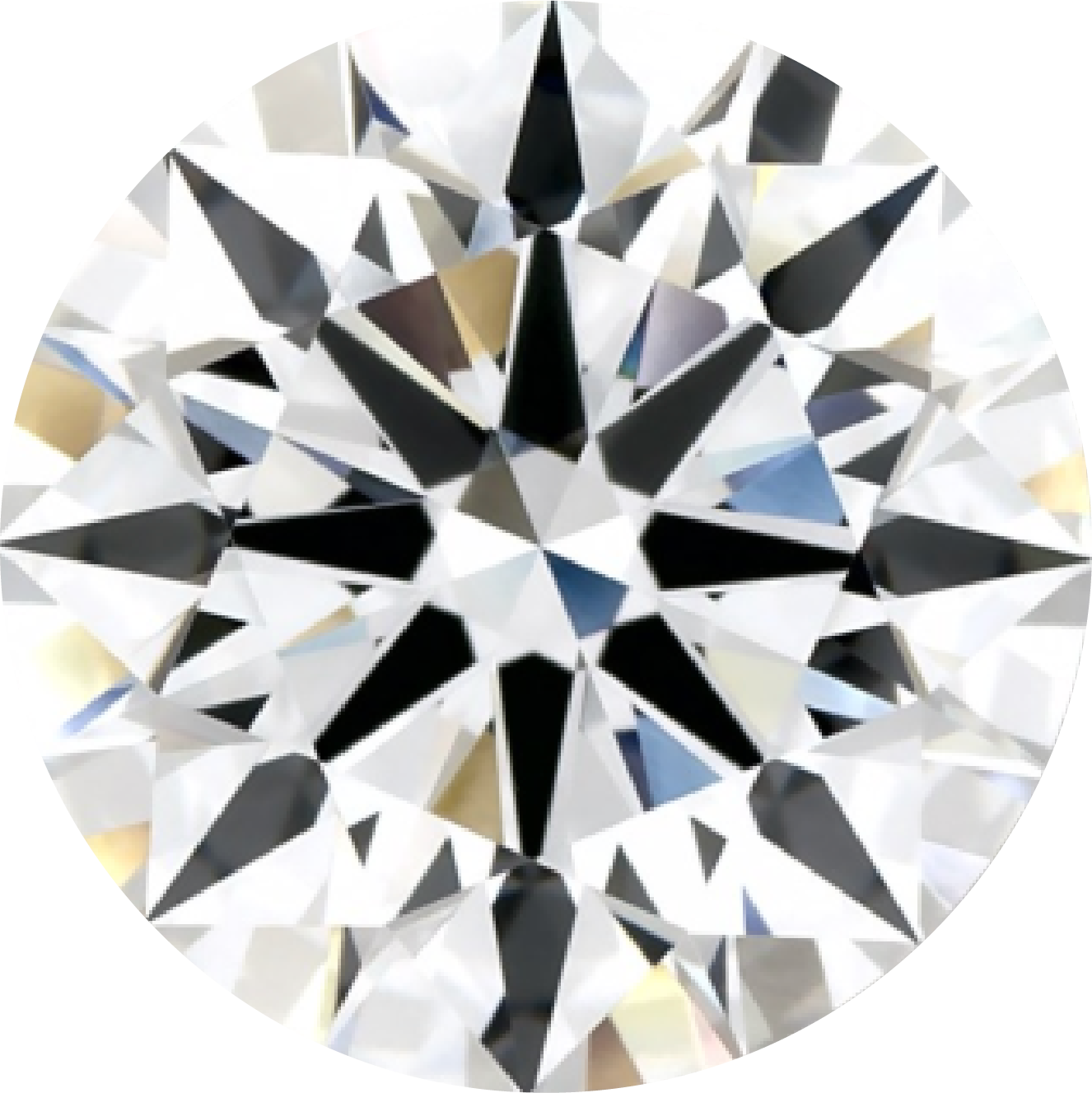
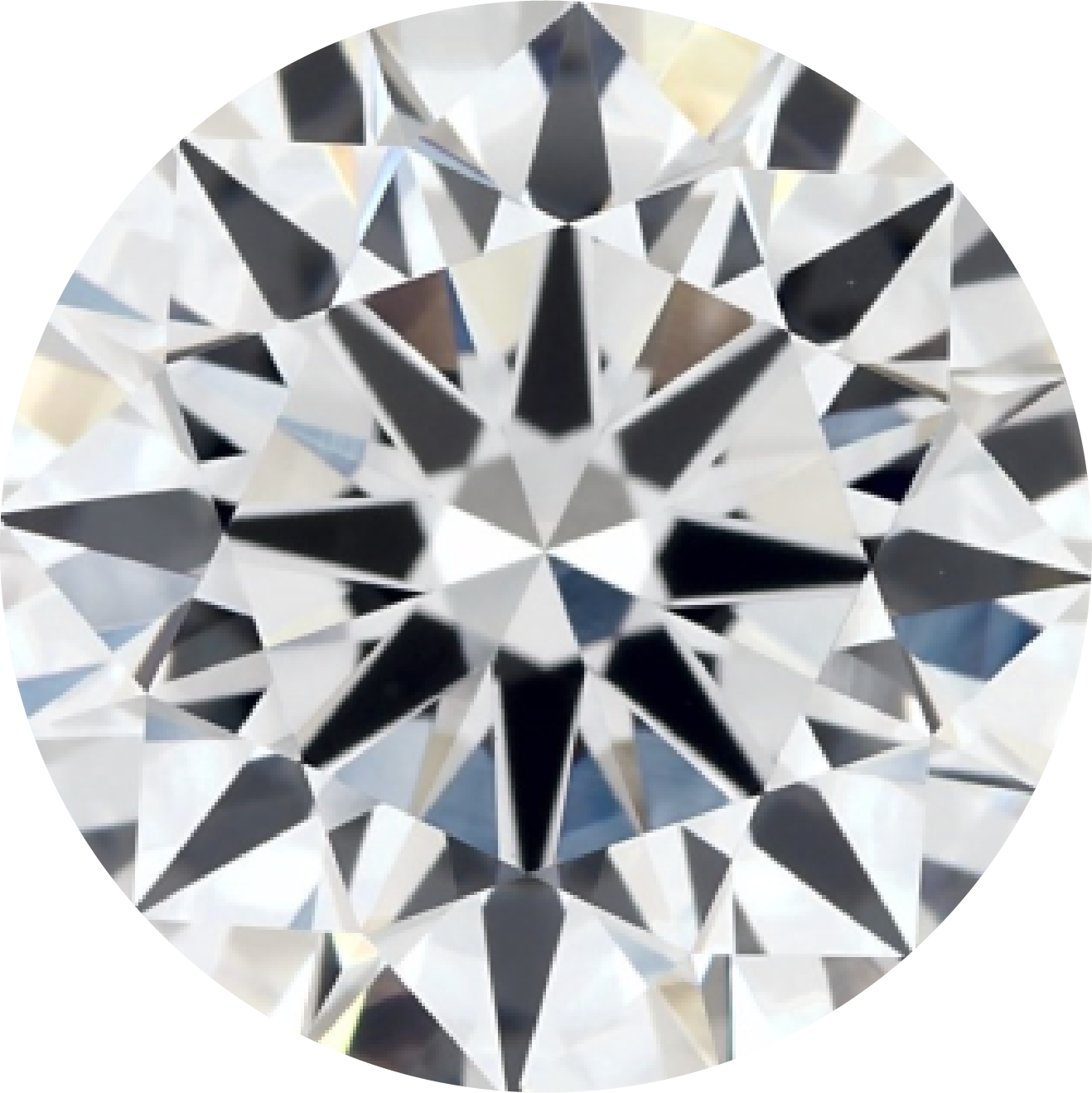
Two identical diamonds: GIA Certified, 1.51ct, D Color, VVS1, Ideal Cut. One is natural ($16,240), the other is lab-grown ($1,970). Choose the diamond you like better and see if you can match it to its origin.
The GIA Structural Audit: The Girdle Vulnerability
While most marketing materials focus on the “architectural beauty” of a bar setting, a true gemological audit reveals a calculated risk. In my 2026 laboratory inspections, I frequently see bar-set rings with “micro-chipping” that the owners didn’t even notice until their yearly appraisal.
Chipping Risk in Bar Set Diamonds
The Physics:
In the anatomy of a diamond, the girdle is the widest part of the stone and its primary “strike zone.” In a traditional prong setting, four to six points of metal act as bumpers. In a channel setting, the girdle is walled in entirely.
However, in a bar setting, the diamonds are held only by two vertical metal walls. This leaves the North and South edges completely naked and exposed to the world.
The Danger:
Think of your ring as a car without a front or rear bumper. If you have a round diamond bar-set engagement ring and you accidentally swing your hand against a glass door or a granite countertop, there is no metal to absorb the energy.
The impact goes straight into the naked diamond edge. Even though diamonds are the hardest material on earth, they are brittle; a sharp hit to an exposed girdle will cause a ‘cleavage’ chip that can instantly devalue a $5,000 stone to zero.
The Fix: The “Platinum Insurance” Policy
If you are committed to the bar-set aesthetic for your 2026 wedding or anniversary, you must upgrade the structural integrity of the “bars” themselves.
2026 Pricing: 14k Gold vs. Platinum Bar Settings
If you want this style, you must upgrade the metal. A platinum bar-set eternity band cost in 2026 is higher—often starting at $2,000+ for quality craftsmanship—but it is the only way to mitigate the risk.
Unlike gold, which is an alloy that can ‘spring’ or bend back upon impact (releasing the stone), platinum is a ‘dense’ metal. It displaces rather than breaks, ensuring those vertical bars maintain a permanent, rigid grip on your diamond’s girdle even after a hard knock.
Before you buy, ask for the GIA report and check the girdle thickness. I recommend a ‘Medium to Slightly Thick’ girdle for any bar-set design.
This gives the stone more ‘meat’ to withstand those North-South impacts that a platinum ring cost covers with peace of mind.
The “Eternity Trap” and Resizing Costs
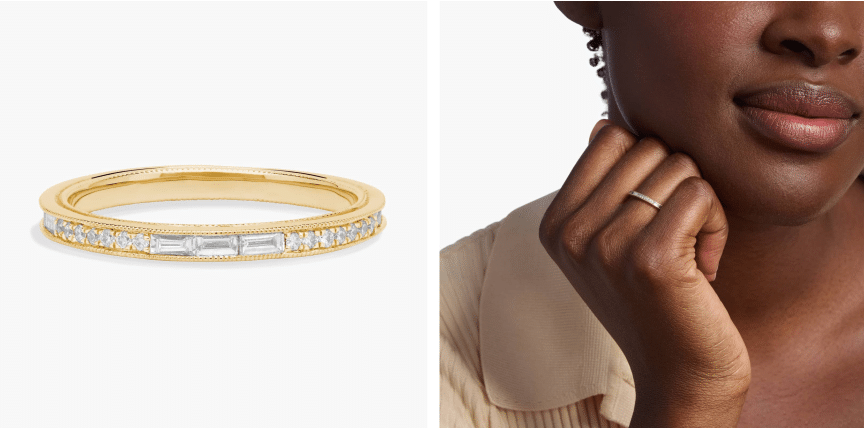
In the 2026 secondary market, I am seeing an influx of “Full Eternity” bar-set rings being sold at a massive loss.
The reason? The owners’ fingers changed size, and they discovered too late that their $4,000 investment was a “permanent” piece of jewelry.
Resizing a Bar Set Eternity Ring Price (The Nightmare)
The Myth:
Most generic jewelry blogs and high-street sales reps will tell you that resizing a bar-set ring is simply “costly” or “challenging.” They imply that with enough money and a skilled jeweler, any ring can be adjusted.
As a GIA expert, I have to be blunt: Resizing a full-eternity bar band is often physically impossible.
When diamonds are set 360 degrees around a band using vertical bars, the ring’s geometry is locked. To change the size, a jeweler must cut the band and force it into a new curve.
This ‘bending’ instantly warps the parallel vertical bars. Even a 0.5mm shift causes the diamonds to pop out like popcorn. In 2026, most top-tier jewelers will refuse to even attempt it because the risk of shattering the diamonds is too high.
The 2026 Solution: The “Sizing Gap” Strategy
If you want the look of an eternity band but don’t want to buy a new ring every time your finger swells due to weather, pregnancy, or aging, you must follow the Half-Eternity or Sizing Gap Rule.
- The Half-Eternity ($1,200 – $1,800): Diamonds cover only the top 50% of the band. The bottom half is solid, high-polished metal. This is the gold standard for 2026 because it looks identical to an eternity band from the top but can be resized for $150–$300 in less than an hour.
- The Sizing Gap (3/4 Band): If you want more diamond coverage, ensure the ring has a “Sizing Bar”—a small, 5mm section of plain metal at the very bottom. This “safety zone” gives the jeweler room to cut and weld without touching the vertical bars.
I tell my clients: Eternity is a long time, but your finger size isn’t. Do not buy a full-bar eternity ring unless you are 100% certain of the size.
If you make a mistake, the ring resizing cost isn’t just a fee—it’s the cost of recasting the entire ring, which can easily exceed $1,500 plus labor. Save your future self the headache and buy a half-eternity style.
Black Friday Sale – Live Now
Rare Carat’s Biggest Deal of the Year is ON.
Shop Diamonds & Jewelry Up to 40% OFF.
*Exclusions may apply. See Rare Carat policies for details.
The Setting Trade-Off Chart
In 2026, the anniversary and wedding band market is dominated by two heavyweights: the Bar Setting and the Channel Setting.
While they look similar from a distance, they are fundamentally different in how they handle light and impact. If you are an anniversary buyer stuck between these two, you are choosing between “Maximum Fire” and “Maximum Defense.”
Bar Setting vs. Channel Setting Durability
The Technical Comparison below breaks down why the bar setting is the “Showstopper” while the channel setting is the “Workhorse.”
In 2026, with lab-grown diamond sizes increasing, the structural choice you make for your band determines whether your diamonds will still be chip-free in 2036.
2026 Setting Comparison Matrix
| Performance Feature | Bar Setting | Channel Setting | Prong Setting | Mehedi’s 2026 Verdict |
|---|---|---|---|---|
| Light Entry & Fire | High (Open Sides) | Low (Blocked Sides) | Maximum (Floating) | The Brilliance King. Prongs allow maximum fire for Round Brilliants. Channels trade light for security. |
| Stone Security | Moderate | Maximum (Full Walls) | Low (Snag Risk) | Active Wear Winner. Channels provide “armor” for stones. Ideal for nurses and active buyers. |
| Girdle Chipping Risk | High (Naked Edges) | Zero (Walled In) | Moderate | The Protection Hack. Channels prevent edge-chips. If choosing a Bar setting, always upgrade to Platinum for rigidity. |
| Ease of Cleaning | Hard (Vertical Gaps) | Medium (Flush) | Very Easy | Maintenance Factor. Prongs are easy to scrub. Bar settings collect lotion/debris in gaps, increasing long-term care costs. |
| 2026 Style Trend | Architectural | Timeless / Classic | Traditional | Quiet Luxury favorite. Bar settings are surging in 2026 for those wanting a modern, geometric silhouette over standard mall-jewelry looks. |
| The 2026 Architecture Verdict: Your choice should match your occupation. For medical and laboratory staff, the **Channel Set** is the only technical choice for glove safety. If you prioritize light return above all else, the **Prong Setting** in Platinum remains the gold standard. View these settings in 3D at James Allen or Blue Nile. | ||||
The Takeaway: Buy for Your Lifestyle
- Choose the Bar Setting ($800 – $3,500): If you want the “Floating Ice” look and your daily life doesn’t involve heavy lifting or high-impact activities. It is the superior choice for Baguette and Emerald cut diamonds because the open sides let light hit those broad facets from every angle.
- Choose the Channel Setting ($900 – $2,800): If you have an active, hands-on job (medical, fitness, or DIY). The metal “track” protects every millimeter of the diamond’s edge, making it virtually indestructible.
In 2026, we are seeing a massive trend toward Stackable Bar Bands in Yellow Gold. They provide more side-sparkle than a channel band when stacked against an engagement ring.
However, if you are prone to ‘clapping’ your hands or hitting them against desk edges, the higher channel set ring price is worth it for the peace of mind.
The Hygiene Gap: Lotion and Bio-Film
In 2026, we are seeing a spike in “Cloudy Diamond Syndrome” among anniversary band owners. Because bar settings prioritize open space for light, they unintentionally create a series of deep, vertical “valleys” between the stones.
These gaps are the primary reason why a bar-set ring requires twice the maintenance of a smooth channel-set band.
How to Clean Dirt From Under Bar Settings
The Reality Check:
Because bar settings have deep, open vertical gaps on the sides, they act like a magnet for hand lotion, soap residue, and Bio-Film.
Bio-film is a microscopic layer of organic matter—a combination of skin oils, dead skin cells, and bacteria—that thrives in the warm, moist environment between your finger and the ring’s metal bars.”
The Consequence:
If you don’t clean it, a brilliant VS1 diamond will look like a cloudy, ‘milky’ I1 diamond in less than 30 days. The bio-film coats the side facets of the diamond, blocking the very light that the bar setting was designed to let in.
Once the sides are coated, the ‘hall of mirrors’ effect is gone, and your expensive wedding band will lose 50% of its fire.
The 2026 “Deep-Reach” Cleaning Fix
You cannot clean a bar-set ring by simply wiping the top with a cloth. You have to treat it like a technical instrument.
- The Weekly Soak: Submerge the ring in warm water with a few drops of grease-cutting dish soap (like Dawn) for 20 minutes. This breaks down the alkaline bonds of the bio-film.
- The Side-Scrub: Use a soft-bristled baby toothbrush or a specialized 2026 sonic jewelry brush (like the Juli Brush). You must scrub the exposed sides (the girdles) of the stones. Most people only brush the top, which leaves the “dirt magnet” gaps untouched.
- The Waterpik Hack: “For the deepest gaps that a brush can’t reach, use a Waterpik on a low-pressure setting. The pulsed water acts like a miniature pressure washer, blasting out trapped lotion from the vertical channels.”
- Professional Ultrasonic: At least once a year, take it to a jeweler for a professional ultrasonic deep clean. In 2026, this typically costs $30–$50 but is often included for free if you purchased from James Allen or Blue Nile.
If you apply heavy hand cream or use hairspray, take the ring off. These products are the #1 cause of ‘Girdle Fog’ in bar settings.
For more on keeping your investment sparkling, check my guide on the hidden costs of an engagement ring—where I break down the 2026 price of professional maintenance plans.
The Laser-Alignment Test (Why Brand Matters)
In a bar setting, there is nowhere for poor craftsmanship to hide. Because the diamonds are held between two parallel walls of metal, any slight tilt or height variation becomes immediately obvious both visually and tactilely.
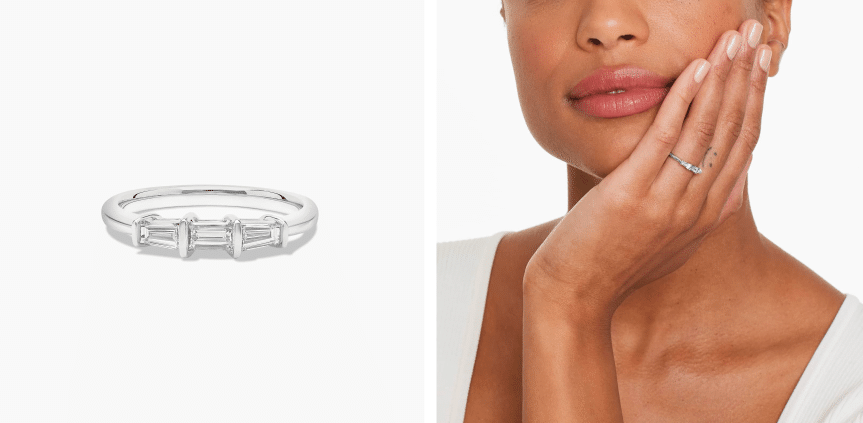
James Allen & Blue Nile Tapered Baguette Bar Setting
When you run your finger over a bar-set ring, it should feel like a single, smooth ribbon of ice. If the diamonds aren’t perfectly calibrated for depth, the ring will feel ‘jagged’ or sharp. This happens when the ‘Tables’ (the flat top facets) of the diamonds aren’t perfectly flush with the metal bars.
In my judicial audits, I find that discount mall jewelers often rush the ‘seating’ process, leading to stones that sit at different heights, which eventually leads to one stone taking more impact and chipping.”
The Specific Data: Blue Nile Tapered Baguette Wedding Ring
We analyzed the Blue Nile Tapered Baguette Wedding Ring (0.33 CTW) in Platinum, currently priced at $2,570.
- The Build: This ring uses three tapered baguettes (G-H Color, VS1-VS2 Clarity) set in a 2.00mm platinum band.
- The Precision: Because Blue Nile uses laser-aligned casting, the “seats” for these baguettes are cut to within microns of the diamond’s actual dimensions. This ensures that the metal-to-stone transition is seamless, preventing the “snag” that ruins the comfort of lower-quality bar settings.
The Verdict: Online Precision vs. Mall “Jaggedness”
“This is why you don’t buy bar settings from discount mall jewelers. A James Allen bar set wedding band review or a Blue Nile purchase ensures you are getting a mounting that was designed in a CAD environment and finished by a master bench jeweler.
When the alignment is perfect, the light reflects in a continuous ‘hall of mirrors’ effect. When it’s off, you just have a ring that scratches your other fingers.”
2026 Trends: Lab Grown and Yellow Gold
As we move through 2026, the “Quiet Luxury” movement has evolved into what I call “Conscious Maximalism.”
High-end buyers are no longer choosing between ethics and aesthetics; they are using the massive savings from lab-grown diamonds to build larger, more intricate “finger stacks.”
Lab Grown Bar Set Rings Under $1,000
The Trend: In 2026, the “standard” wedding band has been replaced by the Yellow Gold Bar-Set Stackable. Yellow gold has reclaimed its throne as the dominant anchor metal, often used as the base for mixed-metal stacks.
The bar setting is uniquely suited for this trend because its vertical lines provide a geometric contrast to traditional round-prong engagement rings.
The 2026 Financial Hack: The Half-Eternity Arbitrage
“By opting for lab-grown diamonds in a half-eternity style, you can easily secure a stunning bar setting for under $1,000.
In 2026, the price of lab-grown melee (small diamonds) has stabilized at such a point that a 1-carat total weight anniversary band—which would have cost $3,500 in natural diamonds—is now accessible to almost every budget.”
2026 Pricing Examples:
- The Minimalist Stack: 1/4 ctw Round Lab Diamond Bar Band (14k Yellow Gold) — ~$890.
- The “Hall of Mirrors” Hack: 1/2 ctw Baguette Lab Diamond Half-Eternity (14k Yellow Gold) — ~$950.
- The Statement Stack: 1ct Sylvia Diamond Anniversary Band (Lab-Grown) — ~$520 (on promotional sale).
Don’t just buy one. The 2026 look is about texture. I recommend pairing a high-polished yellow gold bar band with a hammered white gold stackable. The vertical bars of the diamond band act as a visual ‘divider,’ making each ring in your stack stand out.
This is the ultimate way to make a $10,000 engagement ring look like $20,000 without spending a penny more on the center stone.
For more ideas on how to stretch your 2026 budget, see my curated list of the Best Engagement Rings Under $10,000—where lab-grown diamonds are the undisputed kings of value.
FAQ: The Bar Setting Masterclass
How much does a platinum bar set eternity band cost in 2026?+
Expect to pay between $2,045 and $4,500 depending on the total carat weight and diamond quality. Platinum is the highly recommended metal for bar settings because its extreme density prevents the vertical bars from “springing” or warping outward over time, effectively locking the diamonds in place. Learn more about platinum pricing in our how much does a platinum ring cost guide.
Why is a bar set band more likely to chip than a channel setting?+
In a channel set ring, the diamond’s delicate outer edges are fully enclosed in solid metal walls. In a bar setting, the North and South edges (the girdles) of the diamond are left completely exposed. One hard knock against a granite countertop or heavy door frame can easily shatter the “naked” edge of the stone. Therefore, bar settings require more mindful daily wear.
Can a local jeweler safely resize a full bar set eternity ring?+
No. Resizing a full 360-degree bar eternity ring is a structural nightmare. Bending the band to change the circumference warps the vertical bars, instantly altering the tension and causing diamonds to pop out. You should always buy a “Half-Eternity” or a band with a distinct “Sizing Gap” to allow for future finger adjustments without incurring a massive ring resizing cost.
What is the difference between a bar setting and a channel setting?+
A bar setting secures the diamonds between solid vertical metal bars, intentionally leaving the sides open so ambient light can flood the stone. A channel setting secures the diamonds between two horizontal metal walls, completely enclosing the sides. While the channel offers maximum protection for healthcare workers or active lifestyles, it noticeably reduces overall sparkle compared to the bar setting.
How do I clean trapped lotion from under a bar set ring?+
Because of the deep vertical gaps between the stones, bar settings are notorious “lotion magnets.” Use a Waterpik on a low-pressure setting to safely blast out bio-film, soap residue, and hand cream from the side gaps without damaging the metal. Regular soaking in warm dish soap is mandatory to maintain the stones’ brilliance. See more tips in our jewelry cleaner guide.
Can I find high-quality lab grown bar set rings under $1,000?+
Yes. By strategically choosing lab-grown diamonds set in a 14k gold half-eternity style, you can find stunning options on sites like James Allen for $700 to $900. This is an excellent way to achieve a “big look” on a strict budget. Explore our James Allen review to see how to navigate their expansive lab-grown inventory.
Why do some bar settings feel jagged or sharp?+
A jagged or rough feel is a clear sign of poor bench calibration. If the jeweler does not set the diamonds at the exact same depth, the “Tables” (the flat tops of the stones) will be uneven. High-end brands like Blue Nile utilize precision laser-alignment during the setting process to ensure a perfectly flush, smooth-to-the-touch finish. You can read more about their quality control in our Blue Nile review.
Does a bar setting sparkle more than a prong setting?+
No. A traditional prong setting (like a classic solitaire) exposes the most diamond surface area, allowing the maximum amount of light into the stone. However, a bar setting does sparkle significantly more than a channel setting because the open sides catch plenty of ambient light. Check out our solitaire engagement ring price guide to compare styles.
Are round or baguette diamonds better for bar settings?+
Baguettes are the classic choice. Their straight edges align perfectly with the vertical metal bars, creating a sophisticated “sleek wall of ice” look with zero gaps. Round brilliant cut diamonds create a beautiful, scalloped look, but their curved shape inherently leaves more of the delicate girdle exposed to potential impact.
Is 14k gold or platinum safer for a bar setting?+
Platinum is by far the safer choice for this specific setting. Gold is an alloy that can bend and “release” the stone upon a hard impact. Platinum is an incredibly dense, “dead” metal that stays exactly where the jeweler pushes it, providing the rigid grip required to properly protect those heavily exposed diamond edges. For a full metallurgical breakdown, see our engagement ring metals pros and cons guide.
Conclusion: Mehedi’s Verdict
A bar setting is the thinking person’s “Quiet Luxury” choice. It offers an architectural, modern look that makes diamonds appear to float across the hand. However, it is not a “set it and forget it” ring.
- The “Never” Rule: Never buy a full-eternity bar band. Your ring resizing cost in the future will be the price of a brand-new ring.
- The “Must-Have”: Always choose Platinum if your budget allows. The structural security it provides to those exposed girdles is worth every penny of the $2,000+ investment.
- The “Expert” Move: Buy a Half-Eternity Tapered Baguette Band from Blue Nile or James Allen. You get the 2026 “Mirror Effect,” laser-aligned precision, and the ability to resize the ring ten years from now.
Final Takeaway:
Don’t let the ‘Floating Illusion’ distract you from the physics. Buy for the lifestyle you actually lead. If you are hands-on, go Channel. If you want the ultimate anniversary fire, go Bar—but go Platinum.